
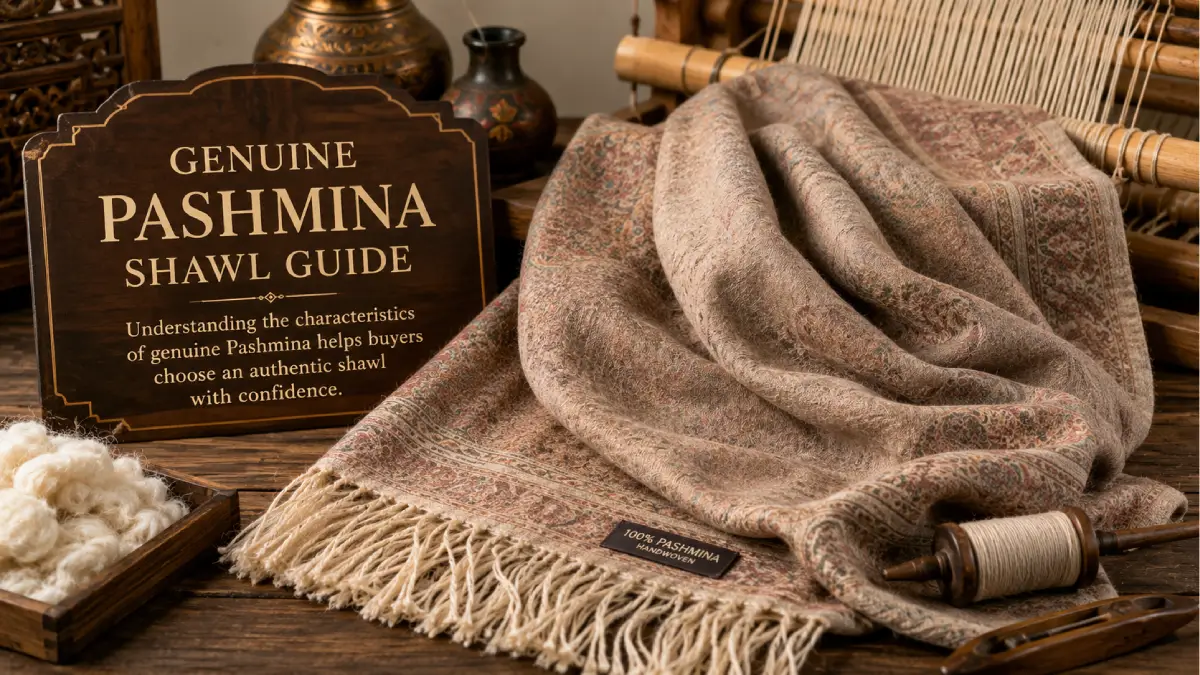
There’s nothing quite like a truly authentic Pashmina shawl. The name Pashmina is practically synonymous with true quality, opulence, and traditional handweaving techniques passed down through the generations. Created from the soft underbelly hair of the Changthangi or “Pashmina goat” dwelling in the high ranges of the Himalayas, true Pashmina is considered to be softer, warmer and weightless all at the same time.
Now unfortunately this rise in popularity has resulted in the arrival on the market of so-called Pashmina which is in fact manufactured from viscose, acrylic, polyester or sheep’s wool! Though it may fool us into believing otherwise these inferior quality products can never match Pashmina for its texture, durability and sheer comfort.
A Comprehensive Guide to the Pashmina; this post has a focus on telling a genuine pashmina from a fake one and tips on how to purchase, misconceptions and more.
Table of Contents
What Is a Genuine Pashmina Shawl?
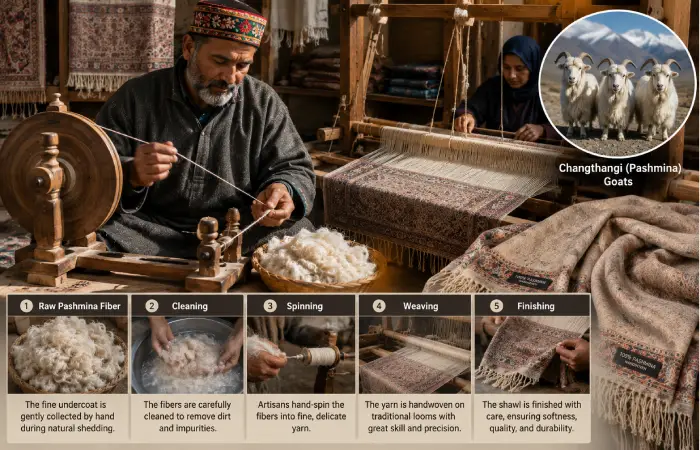
In a real Pashmina shawl, super-soft wool is collected from the Changchang goats. This wool is from the primer of this goat that is found in extreme cold of Himalayas. The goats have super soft wool as they naturally have thick wool to resist ultra cold weather.
Once harvested, the fibers are processed: clean the hairs of animals with them are woven and then processed Traditionally made by artisans as if handcrafted Fabric luxurious, the one we produce is extraordinarily soft, hot, lightweight and also breathable.
These fibers are hand cleaned and twisted to create yarn that then can traditionally be woven into cloth by a master weaver. Thus producing, with hand spun material, an exquisite piece that is remarkably soft,warm and light unlike cheap synthetic imitations weight and breathable.
Why Are Fake Pashmina Shawls So Common?
I feel this product was over-advertised and is being sold as “Pashmina” to appeal to its consumerbase.”
Common imitation materials include:
- Acrylic
- Polyester
- Rayon
- Viscose
- Ordinary sheep wool
- Wool blends
These products may resemble authentic Pashmina but differ significantly in quality, durability, and performance.
Characteristics of Genuine Pashmina
| Feature | Genuine Pashmina | Fake or Synthetic Shawl |
| Material | Pure Pashmina wool | Acrylic, polyester, rayon, blends |
| Feel | Soft, warm, breathable | Very smooth or slippery, sometimes rough |
| Weight | Extremely lightweight | Usually heavier or unnaturally light |
| Warmth | Excellent insulation | Less warmth |
| Texture | Slight natural texture | Uniform and overly smooth |
| Durability | Long-lasting with proper care | May pill or wear quickly |
How to Identify if the Pashmina Shawl You Are Buying Is Genuine
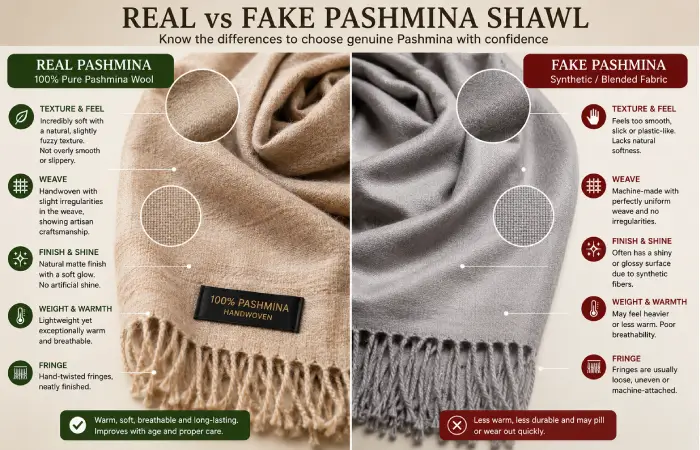
Check the Fiber Content Label
The first step is reading the product label.
A genuine shawl should clearly indicate:
- 100% Pashmina
- 100% Cashmere Pashmina (where accurately described)
- Certified Pashmina (if applicable)
Be cautious of vague labels such as:
- Pashmina Feel
- Pashmina Style
- Pashmina Blend
- Soft Pashmina
These often indicate the creation is not made entirely from honest Pashmina.
Feel the Surface
Many people assume genuine Pashmina feels silky smooth.
In reality:
- Authentic Pashmina feels incredibly soft.
- It has a slight natural texture due to the fine fibers.
- It becomes even softer over time.
Synthetic fabrics often feel:
- Extremely slippery
- Artificially silky
- Plastic-like
If the material feels unusually glossy or slick, it may not be honest.
Examine the Weave
Traditional Pashmina is frequently handwoven.
Look closely for:
- Slight variations in the weave
- Minor irregularities
- Natural hand-crafted appearance
Machine-made counterfeit shawls usually display:
- Perfectly uniform weaving
- Identical thread spacing
- No natural imperfections
These minor quirks serve to set a real handmade treasure from something produced by an assembly line.
Look for Natural Warmth
Despite being lightweight, honest Pashmina provides outstanding insulation.
A real shawl should:
- Feel warm almost immediately after draping it over your shoulders
- Remain breathable without causing overheating
- Offer comfort in cool weather
Synthetic materials often feel less insulating or trap heat without the same breathable comfort.
Inspect the Surface
Authentic Pashmina fibers are natural, so the fabric may display:
- A soft matte finish
- Fine natural fuzz
- Gentle texture
Counterfeit fabrics often feature:
- High shine
- Excessive gloss
- Plastic-like appearance
Natural fibre’s generally have a more understated, elegant look than synthetic materials.
Check the Price
While price alone is not the ultimate testament to authenticity it serves as a major cue. Hand woven in limited quantities and with precious natural fibers, true Pashmina is far more expensive then synthetic ones.
Typical Price Comparison
| Type of Shawl | Typical Price Range* | Likelihood of Being Genuine |
| Synthetic “Pashmina” | $10–$40 | Very Low |
| Wool Blend | $40–$100 | Moderate |
| Genuine Handwoven Pashmina | $150–$500+ | High |
| Best Artisan or Embroidered Pashmina | $500–$2,000+ | Very High |
* The costs will change based on make, place of origin, brand, embroiderer, along with seller. If perhaps the salesperson promises
“one hundred per cent natural authentic pure authentic authentic authentic pure Cashmere” at surprisingly low cost the caution of approaching a case must be kept in mind. For more related articles visit our website
Ask for an Authenticity Certificate
There are quite a few reputable retailers and manufacturers who provide documentation to show Authenticity.
Before purchasing, ask whether the seller can provide:
- A certificate of authenticity
- Product origin information
- Material composition details
- Manufacturing information
Although a certificate is helpful, it should be considered alongside the overall quality and reputation of the seller.
Buy from Reputable Sellers
One of the best ways to avoid counterfeit products is to purchase from trusted retailers known for transparent sourcing and quality.
Before buying, consider:
- Customer reviews
- Return and exchange policies
- Detailed product descriptions
- High-quality product photos
- Transparent material disclosures
A reputable seller is generally more willing to answer questions about sourcing and craftsmanship.
Inspect the Edges and Fringe
Traditional handwoven Pashmina shawls often feature carefully finished edges.
Look for:
- Neatly twisted or hand-finished fringes
- Consistent stitching
- Fine craftsmanship
Poor-quality imitations may have:
- Loose threads
- Uneven fringe
- Machine-finished edges with visible defects
Small details often reveal the overall quality of the shawl.
Understand the Burn Test (Not Recommended Before Purchase)
Some online guides mention the burn test as a way to identify natural fibers.
Natural animal fibers typically:
- Smell similar to burning hair
- Produce soft ash
Synthetic fibers often:
- Melt
- Produce hard plastic-like residue
- Emit a chemical odor
However, this test should not be performed on a new or store-owned shawl, as it can permanently damage the fabric. It is generally not a practical method when shopping.
Genuine Pashmina vs Fake Pashmina
| Feature | Genuine Pashmina | Fake Pashmina |
| Fiber Source | Changthangi goat undercoat | Synthetic fibers or wool blends |
| Softness | Soft with a natural texture | Overly silky or rough |
| Warmth | Excellent warmth for its weight | Moderate to poor |
| Breathability | Highly breathable | Less breathable |
| Shine | Soft, natural matte finish | Glossy or shiny |
| Weight | Lightweight yet warm | Often heavier or less insulating |
| Craftsmanship | Frequently handwoven | Commonly machine-made |
| Price | Premium | Usually inexpensive |
Common Myths About Pashmina
Myth 1: Softer Means More Genuine
Reality: Genuine Pashmina is exceptionally soft but retains a subtle natural texture. An overly silky feel may indicate synthetic fibers.
Myth 2: Every Expensive Shawl Is Genuine
Reality: A high price alone does not confirm authenticity. Always evaluate the material, craftsmanship, and seller reputation.
Myth 3: All Pashmina Shawls Are Identical
Reality: Genuine Pashmina varies in weave, thickness, embroidery, and craftsmanship. Handmade products naturally exhibit slight variations.
Myth 4: Machine-Made Shawls Cannot Be Good Quality
Reality: While many authentic Pashmina shawls are handwoven, quality can vary. Craftsmanship, fiber quality, and transparency from the manufacturer are all important considerations.
Caring for a Genuine Pashmina Shawl
Proper care helps preserve the beauty and longevity of your shawl.
Care Tips
- Hand wash only when necessary using cool water and a mild wool-safe detergent.
- Avoid wringing or twisting the fabric.
- Lay flat on a clean towel to dry.
- Store folded rather than hanging for long periods.
- Protect from moths by storing in a breathable cotton bag or with natural repellents such as cedar.
- Avoid direct heat and prolonged sunlight during storage.
With proper care, a genuine Pashmina shawl can last for many years.
Buying Checklist
Before purchasing, ask yourself the following:
| Question | Yes | No |
| Is the material clearly identified? | ☐ | ☐ |
| Does the shawl feel naturally soft rather than slippery? | ☐ | ☐ |
| Is the price realistic for genuine Pashmina? | ☐ | ☐ |
| Does the seller have positive reviews and a clear return policy? | ☐ | ☐ |
| Are the weave and finishing details of high quality? | ☐ | ☐ |
| Can the seller provide information about origin or authenticity? | ☐ | ☐ |
The more “Yes” answers you have, the greater the likelihood that the shawl is authentic.
Frequently Asked Questions (FAQs)
- How can I tell if a Pashmina shawl is genuine?
Look for natural softness, lightweight warmth, a subtle texture, quality craftsmanship, clear material labeling, and purchase from a reputable seller. Genuine Pashmina should not feel overly slippery or have an artificial shine.
- Are all shawls labeled “Pashmina” authentic?
No. Many products use the word “Pashmina” for marketing purposes even though they are made from acrylic, viscose, polyester, or wool blends.
- Why is genuine Pashmina expensive?
Authentic Pashmina comes from the fine undercoat of Changthangi goats and involves labor-intensive collection, spinning, weaving, and finishing. These factors contribute to its higher price.
- Does genuine Pashmina itch?
High-quality Pashmina is generally very soft and comfortable. People with sensitive skin may notice a slight natural texture, but it is usually much softer than ordinary wool.
- Is a certificate of authenticity enough to prove a shawl is genuine?
A certificate can be helpful, but it should be considered alongside the product’s quality, seller reputation, craftsmanship, and transparent product information.
- Can genuine Pashmina be machine washed?
It is most commonly advised to wash original Pashmina with hand-washable clothing, in a similar cool washing with special wool cleaner or in accordance with producer CareLabel.
- Is Pashmina warmer than regular wool?
Certainly true for true Pashmina – it provides good insulation and is also lightweight and very ‘breathable’ so you can wear it in cool weather without overheating.
Conclusion
Identifying a real Pashmina shawl before buying will ensure that you make the purchase with assurance and don’t get cheated by the market. A genuine Pashmina wool product is defined by the extreme fineness, lighter weight, natural touch and superior finish by the professional. An individual property doesn’t always guarantee the authenticity, but an assessment of the fiber content, the weave, the feel, the cost and the vendor along with documentation is a clearer perspective.
Take enough time to make any purchase decision especially when shopping over the internet. Go through the descriptions very meticulously and compare prices from trusted providers. The sellers are generally there to clarify your doubts and you are free to query about the origin of the product, material used, etc. A real Pashmina is an investment for life if taken care of.