

In the pursuit of “how painful is Beziatenaz?’, you will not find reference to a drug named Beziatenaz because this is a misspelling of Benzathine Penicillin G. Benzathine Penicillin G is a long-acting antibiotic injection. We will go over: How painful is this shot? Why is it painful and how do we make it less painful.
Table of Contents
What Is Beziatenaz?
“Beziatenaz” is a popular searched keyword online, although it is probably not an authentic medicine name. It may actually be Benzathine Penicillin G, an antibiotic injection that treats bacterial infections.
Doctors commonly prescribe Benzathine Penicillin G for:
- Syphilis
- Streptococcal throat infections
- Rheumatic fever prevention
- Other bacterial infections as recommended by a healthcare provider
How Painful Is the Beziatenaz Injection?
The injection is often described as moderately to quite painful because the medication is thick and must be injected deep into a large muscle.
Many patients describe the pain as:
- Sharp burning during the injection
- Pressure inside the muscle
- Muscle soreness afterward
- Tenderness lasting one to three days
Pain varies from person to person.
Why Does It Hurt So Much?
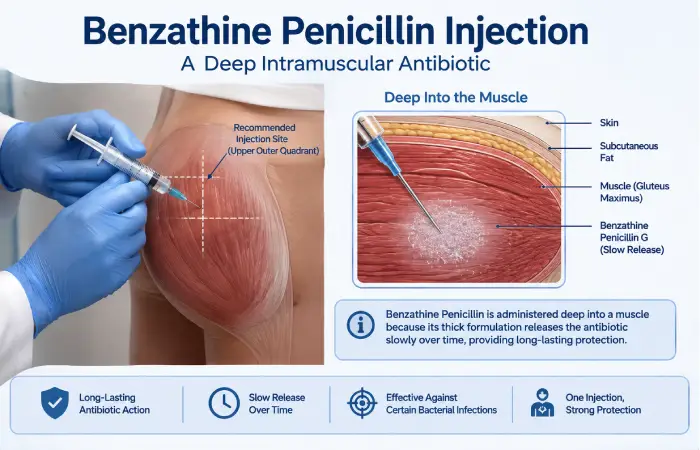
Several factors make the injection uncomfortable.
Thick Medication
Benzathine Penicillin G is much thicker than many other injectable medicines.
Deep Intramuscular Injection
The medicine is injected deep into muscles such as the buttock or thigh.
Large Volume
Some doses require a relatively large amount of medication, increasing pressure in the muscle.
Pain Scale
Patient experiences differ, but many report:
| Stage | Pain Level |
| Needle insertion | Mild |
| Medication injection | Moderate to Severe |
| First few hours | Moderate soreness |
| After 24–72 hours | Mild discomfort |
How Long Does the Pain Last?
Most people experience:
- Immediate pain during the injection
- Soreness for 24 to 72 hours
- Gradual improvement over several days
Persistent or worsening pain should be evaluated by a healthcare professional.
Who Should Receive Benzathine Penicillin Injections?
Benzathine Penicillin G is prescribed only by a healthcare professional for specific bacterial infections. Common uses include:
- Treating early and late-stage syphilis
- Preventing recurrent rheumatic fever
- Treating certain streptococcal (strep) infections
- Managing other susceptible bacterial infections
Because it is a prescription medication, patients should never attempt to self-administer the injection.
Who May Experience More Pain?
Pain perception varies from person to person. The injection may feel more uncomfortable if:
- The medication is injected too quickly.
- The muscle is tense during the procedure.
- A higher dose is required.
- The injection site is already sore or inflamed.
- The patient has a low pain tolerance.
Proper administration of any injected drug by health professionals will in no way contribute to further comfort as best as it can get.
Normal Pain vs. When to Seek Medical Care
It’s normal to feel a little sore after receiving the injection, however, some symptoms call for prompt attention from your doctor.
| Normal Symptoms | Contact a Doctor If You Notice |
| Mild soreness | Severe or worsening pain |
| Tenderness | High fever |
| Minor redness | Large swelling |
| Muscle stiffness | Difficulty walking for several days |
| Slight discomfort when sitting | Signs of an allergic reaction |
What Happens After the Injection?
After receiving the injection, most people can return to their normal daily activities. Some individuals may notice:
- Mild soreness when sitting
- Temporary muscle stiffness
- Slight difficulty climbing stairs
- Tenderness when touching the injection site
These symptoms generally improve over the next few days.
Can You Exercise After the Injection?
Light activities such as walking are generally acceptable unless your healthcare provider advises otherwise.
For the first 24–48 hours, it may help to avoid:
- Heavy weightlifting
- Sprinting
- Intense leg workouts
- Long-distance running
Gentle movement can actually help reduce muscle stiffness.
Does the Injection Work Immediately?
The dose, while it may be given in a single injection, consists of an antibiotic intended for a long and gradual effect in your blood supply to act on amenable bacteria over an extended time.
Even if you begin feeling better, please make sure to observe your healthcare professional instructions.
Common Myths About Benzathine Penicillin Injections
Myth 1: The injection is dangerous because it hurts.
Fact: Pain does not mean the medication is unsafe. Temporary soreness is a common side effect of deep intramuscular injections.
Myth 2: Everyone experiences severe pain.
Fact: Pain varies from person to person. Some people report only mild discomfort.
Myth 3: Pain means the injection was given incorrectly.
Fact: Even when administered correctly, Benzathine Penicillin G injections can cause temporary pain because of the medication’s thick formulation.
Safety Precautions
Before receiving the injection, tell your healthcare provider if you:
- Have a history of penicillin allergy
- Are pregnant or breastfeeding
- Have kidney disease
- Take prescription medications regularly
- Have experienced severe reactions to antibiotics before
Tips to Reduce Injection Pain

Healthcare providers may recommend:
- Relaxing the muscle before the injection
- Receiving the injection slowly
- Walking gently afterward
- Applying a warm compress if advised
- Taking an over-the-counter pain reliever if appropriate
Always follow your healthcare provider’s instructions.
Possible Side Effects
Besides injection-site pain, some people may experience:
- Redness
- Swelling
- Mild fever
- Temporary muscle stiffness
- Allergic reactions (rare but serious)
Seek emergency medical care if you develop difficulty breathing, severe rash, or facial swelling.
Is the Pain Worth It?
Although the injection may be uncomfortable, it is an effective treatment for several serious bacterial infections. For many conditions, a single injection can provide long-lasting antibiotic coverage.
Frequently Asked Questions
Is Beziatenaz a real medicine?
The name “Beziatenaz” does not match any officially recognized medication. It is likely a misspelling of Benzathine Penicillin G.
How painful is the injection?
Many patients describe it as moderately to severely painful during administration, with soreness lasting a few days.
How long will my arm or leg hurt?
With proper injection to a muscle it tends to get better within 1-3 days.
Can I walk after the injection?
Yeah. Slow movement is frequently indicated unless told differently by their medical doctor.
Can I reduce the pain?
It is possible to minimise any pain by relaxing the muscle, having the injection given slowly and following the post-injection after care advice.
Conclusion
If you typed “How painful is Beziatenaz?”, you are perhaps trying to learn more about Benzathine Penicillin G shots, often mentioned to as Benzpenicillin inoculations. While they tend to cause temporary discomfort that subside in a few days, its positive effects often help to outweigh short periods of discomfort by effectively treating bacterial infections. Your doctor may offer further recommendations prior to and following injections for any concern over pain. This entry would make a very good health and information article but, as indicated near the entry near beginning, state your indication the subject of Beziatenaz seems to be a mispelling.