
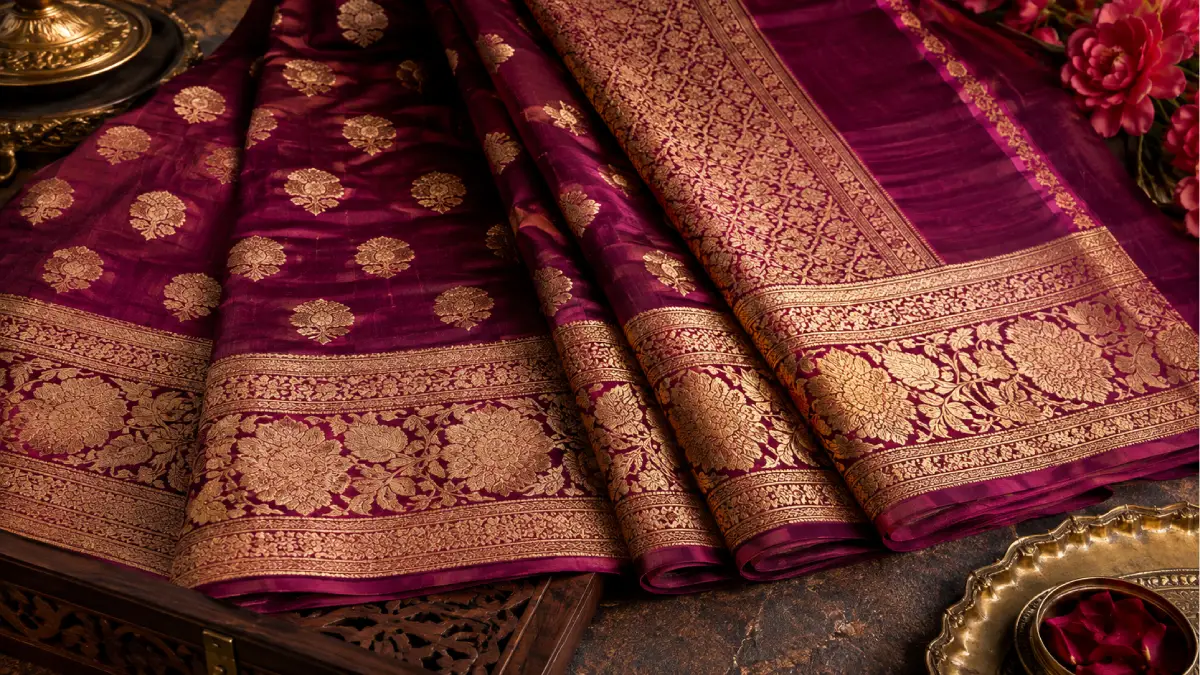
If shoppers are trying to get hold of a tradition Indian saree and that would comprise of all the rich detail-oriented patterns as well as a polished Festive feel, a JDS Banaras saree would certainly offer a tempting alternative. Traditionally, Banarasi sarees refer to weavers from the city of Varanasi, where these are worn as formal event-, weddings and festive occasions-appropriate sarees.
But beyond simply picking out a stunning colour or pattern, your decision also has to incorporate elements such as textile material, weaving patterns, presence of zari, weigh, finish, and even your proposed reason for wear. You will now read on as it talks through what elements need be present to guide you during JDS Banaras sarees exploration.
Table of Contents
What Is a JDS Banaras Saree?
If a shopper is looking for a saree that is sold and/or associated with JDS Banaras, and the category of Banaras weaving, “JDS Banaras saree” is appropriate.
A Banaras saree traditionally comes from Varanasi-also named Banaras.
They are known for decorative weaving, with detailed designs and patterns that rely on the interplay of thread and especially zari (metallic thread) effects.
In terms of a style collection, it can include floral patterns and designs, traditional woven motifs or a highly patterned bordered orall-over-woven effect.
As descriptions vary from seller to seller, it is advisable for the shopper to investigate the fabric and weaving description of an individual saree rather than using only the word “Banarasi”.
Popular Features to Look for in JDS Banaras Saree
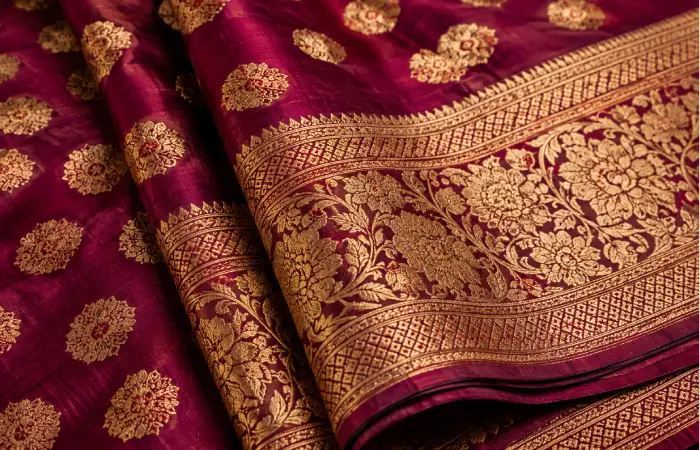
When comparing different sarees, several characteristics can help you understand what you are buying.
1. Fabric
Banarasi-inspired sarees can be made using different fabrics and blends. Silk is traditionally associated with premium Banarasi sarees, while other materials may provide a lighter or more affordable option.
Always check the product description for the actual fabric composition.
2. Zari Work
Zari can significantly influence the appearance of a saree. Gold-toned or silver-toned zari can create a richer look, particularly for wedding and festive wear.
The amount and type of zari can also influence the saree’s weight and price.
3. Motifs and Patterns
Traditional Banarasi designs often include floral elements, vines, paisley-inspired patterns and decorative borders.
Some contemporary designs combine traditional motifs with simpler layouts, making them suitable for shoppers who want a balance between classic and modern styling.
4. Border and Pallu
The border and pallu are among the most noticeable parts of a saree. A detailed pallu can make a saree appear particularly formal, while a simpler border may create a more understated look.
JDS Banaras Saree for Weddings
A Banarasi saree can work particularly well for wedding-related occasions.
For the bride, heavily decorated silk sarees can create a traditional appearance. Wedding guests may prefer lighter designs that provide an elegant look without being excessively elaborate.
When selecting a wedding saree, consider:
- The wedding venue and time of day
- The level of embroidery or zari work
- Saree weight
- Blouse design
- Jewellery compatibility
- Colour coordination
- Whether the saree will be comfortable for several hours
Deep red, maroon, pink, green, purple and gold-toned combinations are commonly associated with festive Indian clothing, although the best colour ultimately depends on personal preference and styling. For more related articles visit our website
Choosing a Saree for Festivals
For festivals, many shoppers prefer sarees that combine traditional details with practical comfort.
A lighter Banarasi-style saree may be easier to wear for extended periods. Simpler designs can also work well when you want the saree to remain the main traditional element without creating an overly formal appearance.
Look for comfortable fabrics, manageable weight and colours that complement your existing accessories.
How to Choose the Right JDS Banaras Saree
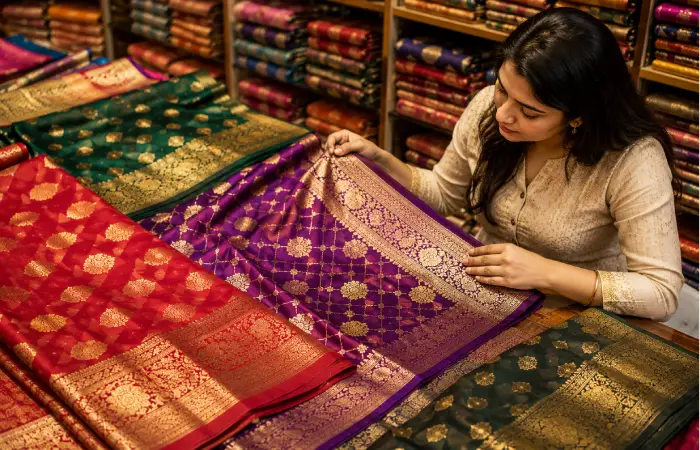
Before purchasing, use a simple comparison process.
Check the Fabric
First determine whether the saree is silk, a silk blend, synthetic fabric or another material.
Fabric affects appearance, comfort, maintenance and price.
Examine the Design
Look closely at the border, pallu and overall motif arrangement. A photograph can sometimes make zari and woven details appear different from how they look in person, so review multiple product images where available.
Consider the Occasion
A heavily embellished saree may be ideal for a wedding but unnecessary for a smaller family gathering.
Choose the design according to how and where you expect to wear it.
Check Saree Measurements
Confirm the saree length, width and blouse-piece details before purchasing. This is particularly important when buying online.
Review Care Instructions
Traditional or delicate sarees may require careful storage and cleaning. Follow the manufacturer’s or seller’s recommended care instructions rather than assuming every saree can be machine washed.
How to Style a JDS Banaras Saree
Styling can significantly change the overall appearance of a saree.
For a traditional look, consider pairing it with:
- Gold-toned jewellery
- Traditional earrings
- A structured blouse
- Classic sandals
- A matching or contrasting clutch
For a more contemporary appearance, you could choose minimalist jewellery, a modern blouse silhouette and a simpler hairstyle.
The key is to balance the saree’s detailing with the accessories rather than adding too many competing elements.
Buying JDS Banaras Saree Online
Online shopping provides access to a wider range of designs, but buyers should check product information carefully.
Before placing an order, review:
- Fabric composition
- Saree dimensions
- Blouse-piece information
- Zari or weaving details
- Product photographs
- Return and exchange policy
- Shipping information
- Customer reviews, where available
- Care instructions
- Final price and any additional charges
Avoid assuming that a higher price automatically means better craftsmanship. Compare the actual materials, construction and finishing details.
How to Identify Quality in a Banarasi Saree
Quality can be assessed through several factors.
A well-finished saree should have consistent weaving, clean edges and a professionally finished pallu and border. Decorative elements should appear properly integrated into the fabric rather than looking poorly attached.
If purchasing an expensive saree, ask for detailed information about the weaving technique, fabric and zari before making a decision.
JDS Banaras Saree: Traditional and Modern Choices
One of the advantages of the Banarasi saree category is its variety.
Traditional designs can provide a heritage-inspired appearance, while contemporary patterns may be easier to incorporate into modern wardrobes.
The right choice depends on whether you prioritise:
- Traditional craftsmanship
- Lightweight comfort
- Elaborate zari work
- Contemporary styling
- Wedding wear
- Festival wear
- Versatility
Instead of selecting purely based on appearance, consider how frequently you are likely to wear the saree and what other pieces in your wardrobe it can complement.
Frequently Asked Questions
What is a JDS Banaras saree?
JDS Banaras saree is a search term associated with Banarasi saree offerings and styles. Buyers should check individual product details to understand the specific fabric, design and weaving characteristics.
Are Banarasi sarees suitable for weddings?
Yes. Banarasi sarees are commonly chosen for weddings and other formal occasions because of their traditional designs, decorative borders and rich appearance.
What should I check before buying a Banarasi saree?
Buy from a seller with good reviews, fabric of good quality material, stitching accurate, zari details and weaving should be proper, do check design and work also check how it is maintained and returned after buying.
How should a Banarasi saree be stored?
Sarees should be stored clean and dry and kept out of direct light for extended periods. Refer to the care label which should come with the saree for detailed care guidelines.
Can Banarasi sarees be worn for festivals?
Yes. There are quite of couple of lighter designs of contemporaryBanarasi wear as well as a conventional design may work well for festivals too – as per your style and type of event you have attended.
Final Thoughts
If shoppers are after the original look of Banaras, but the design and style appropriate for functions like weddings and festivals should be on their minds to find their desired wedding saree or an Indian ethnic wedding dress, and should consider a Banaras weave with JDS Banaras saree in their options, then they must pay attention to the fabric, weaving details, zari work, finished, dimensions as well as application of saree other factors such as what matters most in purchasing are, of course, a name not by brand, but the quality and value that you would get while considering so many minute factors and so on etc .