
Hair loss is a significant and personal concern for men and women across the world, as it can undermine one’s confidence and affect self-esteem. With progress in medicine, these treatment methods are more sophisticated and affordable. When searching for a hair transplant clinic in India, you are sure to come across the nameEugenix Hair Science.
Whether it’s early stages of thin hair, end-stage hair loss or undergoing correction hair transplant after a prior hair transplant session at another clinic. Here you know how the clinic works; all services, treatment options available, prices (costs) likely, how to make appointment and realistic outcome without misleading advertisement.
Table of Contents
Eugenix Hair Science at a Glance
| Feature | Details |
| Clinic Type | Hair restoration and cosmetic treatment clinic |
| Primary Focus | Hair transplant and hair loss management |
| Main Treatments | FUE, Direct Hair Transplant, beard transplant, eyebrow transplant, scalp treatments |
| Consultation | In-person and online consultations may be available |
| Suitable For | Men and women experiencing hair loss |
| Recovery | Depends on procedure and individual healing |
| Treatment Plan | Personalised after medical evaluation |
What Is Eugenix Hair Science?
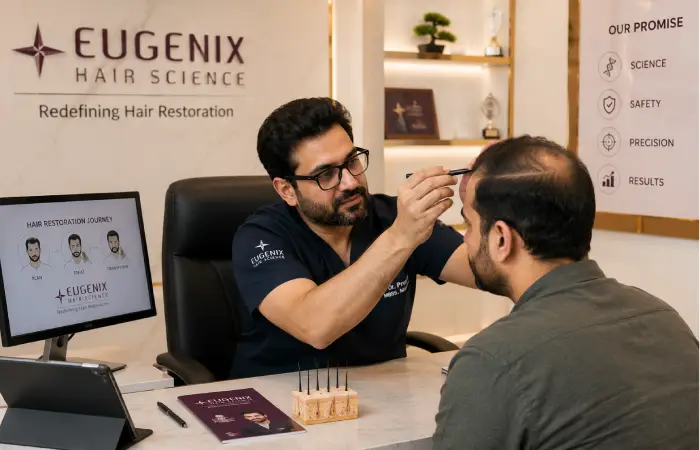
Eugenix Hair Science is a specialised hair restoration clinic that focuses on diagnosing and treating different forms of hair loss. Rather than offering a single solution for every patient, treatment plans are generally tailored according to:
- Pattern of hair loss
- Age
- Donor hair availability
- Medical history
- Long-term hair restoration goals
- Overall scalp health
The clinic provides both surgical and non-surgical options where appropriate. During an initial consultation, specialists usually assess whether a transplant is suitable or whether other treatments should be considered first.
Hair Loss Conditions Commonly Evaluated
People visit hair restoration clinics for various reasons, including:
- Male pattern baldness
- Female pattern hair thinning
- Receding hairline
- Crown baldness
- Patchy hair loss
- Scar-related hair loss
- Hair transplant correction
- Beard enhancement
- Eyebrow restoration
Not every condition requires surgery. In some cases, doctors may recommend medical therapy or monitoring before proceeding with a transplant.
Hair Transplant Services Offered by Eugenix Hair Science
Hair restoration clinics typically provide multiple procedures designed for different needs. The exact treatment recommended depends on the consultation findings.
1. Follicular Unit Extraction (FUE)
FUE is one of the most widely used hair transplant techniques. Individual hair follicles are extracted from the donor area and implanted into areas with thinning or baldness.
Potential advantages include:
- Minimal visible scarring
- Faster healing than older strip techniques
- Natural-looking hairline when performed carefully
- Suitable for many hair loss patterns
Recovery times vary from person to person.
2. Direct Hair Transplant (DHT)
Some clinics also perform Direct Hair Transplant techniques that aim to minimise the time between follicle extraction and implantation.
Possible benefits may include:
- Careful handling of grafts
- Precision placement
- Dense-looking results when appropriate
- Customised hairline design
Technique selection depends on the surgeon’s assessment and the patient’s condition.
3. Beard Hair Transplant
Patients with sparse facial hair sometimes seek beard restoration.
Typical goals include:
- Filling patchy beard areas
- Improving beard density
- Reshaping facial hair
- Correcting uneven growth
Healing expectations are generally similar to scalp transplant procedures.
4. Eyebrow Hair Transplant
Eyebrow restoration can be considered for individuals experiencing eyebrow thinning due to:
- Genetics
- Injury
- Over-plucking
- Medical conditions
- Previous cosmetic procedures
The procedure requires careful placement because eyebrow hair grows differently from scalp hair.
5. Hairline Reconstruction
Hairline design plays a significant role in achieving a natural appearance.
Rather than creating an unnaturally low hairline, specialists generally aim for a design that matches:
- Facial proportions
- Age
- Existing hair density
- Future hair loss progression
A conservative approach may provide more sustainable long-term results.
6. Corrective Hair Transplant Procedures
Some patients seek treatment after unsatisfactory hair transplant procedures performed elsewhere.
Corrective work may involve:
- Repairing unnatural hairlines
- Improving density
- Redistributing grafts
- Camouflaging scars
- Enhancing previous transplant results
Such procedures can be more complex than first-time transplants.
Cosmetic and Advanced Hair Restoration Services
Depending on individual assessment, patients may also be offered supportive treatments alongside or instead of surgery.
These may include:
| Treatment | Purpose |
| PRP Therapy | May support scalp health in selected cases |
| Hair Loss Assessment | Identifies possible causes of hair thinning |
| Scalp Analysis | Evaluates scalp condition before treatment |
| Medical Hair Management | Non-surgical management where appropriate |
| Follow-up Monitoring | Tracks healing and hair growth progress |
These supportive options are not guaranteed to replace surgical treatment and should be considered based on professional medical advice.
Comparison of Common Hair Restoration Procedures
| Feature | FUE Hair Transplant | Direct Hair Transplant | PRP Therapy |
| Surgical Procedure | Yes | Yes | No |
| Recovery Time | Moderate | Moderate | Short |
| Anaesthesia Required | Local | Local | Usually minimal |
| Suitable for Advanced Baldness | Often | Often | Generally limited |
| Permanent Hair Relocation | Yes | Yes | No |
| Maintenance Sessions | Usually not frequent | Usually not frequent | Often required |
The most appropriate option depends on the severity of hair loss, donor hair quality, and the treatment goals discussed during consultation.
What Should Patients Realistically Expect?
One of the most important aspects of choosing Eugenix Hair Science or any hair restoration clinic is understanding that results develop gradually.
Patients should keep the following in mind:
- Hair transplant results are not immediate.
- Transplanted hair often sheds before new growth begins.
- Visible improvement usually occurs over several months.
- Final density may continue developing for up to a year or longer.
- Individual healing and hair growth rates vary.
A successful outcome depends on several factors, including surgical technique, donor hair quality, post-procedure care, and natural hair characteristics. No clinic can ethically guarantee identical results for every patient.
Appointment Process at Eugenix Hair Science
Although individual clinics may have slight variations, the consultation and treatment journey generally follows a structured process.
Step 1: Initial Consultation
The first appointment usually includes:
- Medical history review
- Hair loss assessment
- Scalp examination
- Donor area evaluation
- Discussion of treatment goals
- Review of previous treatments, if any
Patients may also be asked about medications, allergies, smoking habits, and any existing medical conditions that could affect healing.
Step 2: Treatment Planning
If a hair transplant is considered appropriate, the specialist typically prepares an individual treatment plan covering:
- Estimated graft requirement
- Recommended transplant technique
- Hairline design
- Expected treatment timeline
- Recovery guidance
- Estimated cost
Not everyone who attends a consultation is advised to undergo surgery immediately. Some individuals may benefit more from medical therapy or monitoring.
Step 3: Pre-Procedure Preparation
Before the procedure, patients may receive instructions such as:
- Avoid smoking for a period before surgery
- Limit alcohol intake
- Discuss blood-thinning medications with the doctor
- Wash the scalp as instructed
- Arrange transport home if needed
Following these recommendations may help reduce procedural risks and support recovery.
Step 4: Hair Transplant Procedure
The procedure generally includes:
- Registration and preparation
- Local anaesthesia
- Donor hair extraction
- Preparation of grafts
- Recipient site creation
- Hair graft implantation
- Final inspection
- Post-operative instructions
Depending on the number of grafts, the procedure may take several hours.
Hair Transplant Workflow
| Stage | What Happens |
| Consultation | Hair and scalp assessment |
| Treatment Planning | Personalised transplant strategy |
| Procedure Day | Hair extraction and implantation |
| Early Recovery | Initial healing over the first few weeks |
| Follow-up | Progress reviews and guidance |
| Long-Term Growth | Hair gradually matures over several months |
Expected Pricing Ranges
Hair transplant pricing varies considerably because every patient requires a different number of grafts.
Factors influencing the total cost include:
- Extent of hair loss
- Number of grafts required
- Complexity of the procedure
- Experience of the surgical team
- Additional therapies recommended
Illustrative Pricing Factors
| Factor | Influence on Cost |
| Small Hairline Restoration | Lower overall cost |
| Crown Coverage | Moderate |
| Extensive Baldness | Higher |
| Corrective Transplant | Often higher due to complexity |
| PRP Sessions | Additional expense |
Patients should request a personalised quotation after consultation rather than relying on fixed online estimates. For more related articles visit our website
Safety and Hygiene Standards
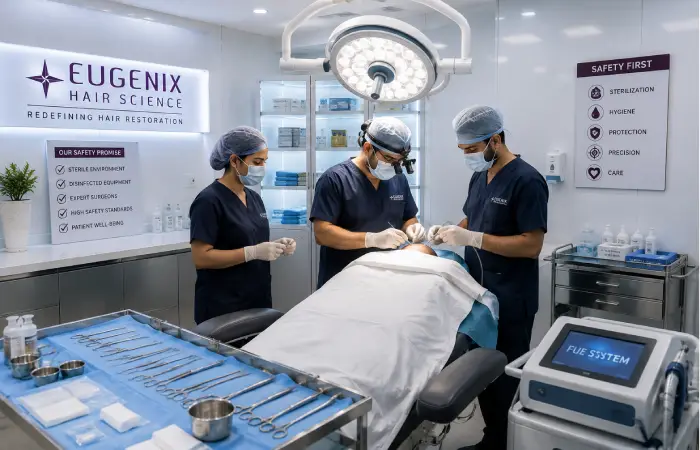
Hair restoration procedures should always be performed in an appropriate clinical environment.
Patients may wish to ask about:
- Sterile surgical instruments
- Infection-control protocols
- Qualified medical staff
- Local anaesthesia safety
- Post-operative monitoring
- Emergency preparedness
- Follow-up care
Understanding these aspects can help patients make informed decisions.
Emergency Support Availability
Hair transplant procedures are usually elective rather than emergency treatments.
However, reputable clinics generally provide guidance for post-procedure concerns such as:
- Swelling
- Mild bleeding
- Medication questions
- Dressing care
- Signs of possible infection
- Follow-up scheduling
Patients should understand how to contact the clinic if concerns arise after surgery.
Who Should Consider Visiting Eugenix Hair Science?
The clinic may be suitable for individuals who:
- Have male pattern baldness
- Experience female pattern hair thinning
- Want beard restoration
- Need eyebrow reconstruction
- Require corrective transplant work
- Prefer a personalised consultation before deciding on treatment
A professional assessment helps determine whether surgical treatment is appropriate.
Who May Need to Delay or Avoid Treatment?
Hair transplantation may not be suitable for everyone.
Examples include individuals with:
- Active scalp infections
- Certain uncontrolled medical conditions
- Insufficient donor hair
- Unrealistic cosmetic expectations
- Ongoing untreated hair-loss disorders
A medical consultation is important to assess individual suitability.
Eugenix Hair Science Compared with Typical Hair Transplant Clinics
| Feature | Eugenix Hair Science | Typical General Cosmetic Clinic |
| Hair Restoration Focus | Dedicated | Often broader cosmetic services |
| Treatment Planning | Personalised | Varies |
| Advanced Hair Procedures | Commonly offered | Depends on clinic |
| Corrective Hair Transplants | Often available | Not always |
| Hair Loss Assessment | Comprehensive | Varies |
| Follow-up Care | Usually structured | Depends on provider |
The right choice depends on clinical expertise, treatment goals, cost, and patient preference rather than clinic name alone.
Benefits and Limitations
Advantages
- Focused expertise in hair restoration
- Multiple treatment options
- Personalised consultation process
- Surgical and non-surgical approaches
- Follow-up care after procedures
Limitations
- Hair transplantation is a surgical procedure
- Results require patience
- Costs vary considerably
- Not everyone is a suitable candidate
- Individual outcomes cannot be guaranteed
Frequently Asked Questions
What is Eugenix Hair Science?
Eugenix Hair Science is a hair restoration clinic that provides consultations, hair transplant procedures, and related hair-loss treatments for eligible patients.
How long does a hair transplant take?
Depending on the number of grafts being transplanted, procedures commonly last several hours and may occasionally require more than one session.
Are hair transplant results immediate?
No. It is normal for transplanted hair to shed initially before new growth begins. Noticeable improvements typically appear gradually over several months.
Is a consultation necessary?
Yes. A consultation helps determine the cause of hair loss, assesses donor hair availability, and identifies the most appropriate treatment plan.
How much does treatment cost?
Pricing varies based on graft numbers, treatment complexity, and any additional therapies. A personalised estimate is usually provided after evaluation.
Is hair transplantation permanent?
Transplanted follicles are generally intended to provide long-term growth, but future natural hair loss can still occur. Long-term management may still be required.
Conclusion
Prospective Eugenix hair treatment will not just depend on price, and, so before you consult as patient, it would be wise that you simply understand procedures you’ll take; cost and rehabilitation you’ll get anticipate from the treatment.
Honesty regarding expectations and meticulous follow up Care in the post-op period will play just as a significant role in achieving an acceptable outcome for hair transplantation surgery as any procedure itself. For many appropriate candidates hair transplantation can lead to a quite cosmetic change, however, individual results vary greatly and no surgeon can promise the exact same outcome for every patient. Choosing the right provider following research and consultation should lead to predictable and satisfactory results.