
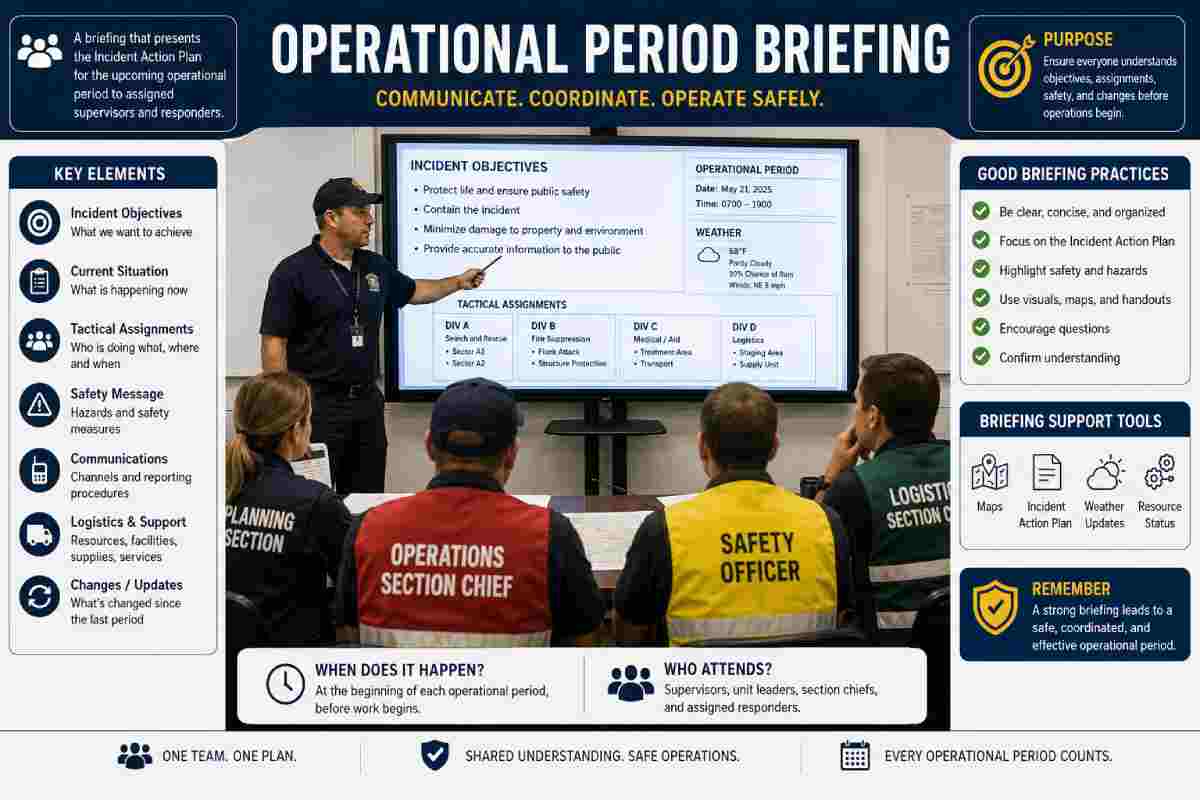
During incident management clear communication is not desirable, it is mandatory. When a response organization is about to embark on another operational period all involved should be aware of the same things at the same time – what the objective for the operation is, what has happened, what tasks and activities are delegated and to whom and what are the critical safety considerations to monitor. And where can this be better achieved than the Operational Period Briefing?
If we require the definition of an operational period briefing the simplest and most correct answer is:
A briefing that sets forth the Incident Action Plan for the upcoming operational period to supervisor and responders.
This means it is the point in the Incident Command system that gets all involved to speak with the same voice before embarking on the next operation. It’s not a quick catch-up. It’s not a meeting to generally chat about a number of things. It is a formal and very important communication tool.
Table of Contents
Definition of Operational Period Briefing
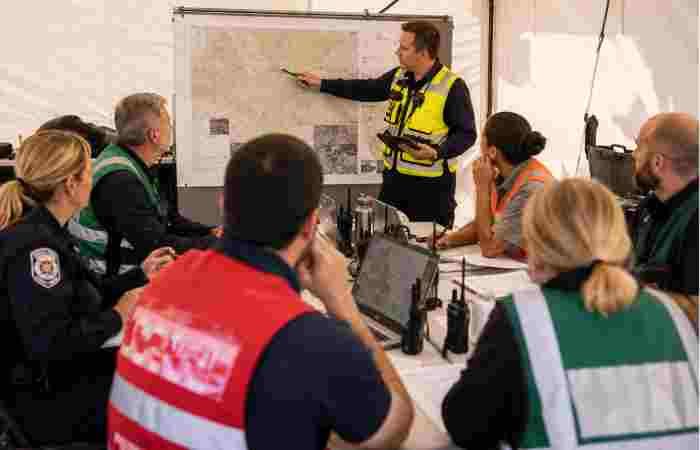
The Operational Period Briefing is a planned meeting that occurs at the beginning of an operational period during the incident response. It ensures all the people assigned the job understand the incident goals, their tasks, the tactical approach, safety considerations, and any tactical modifications that have been developed.
This is typically conducted by the Incident Commander or assigned incident official and is within the incident management system for purposes of moving the incident from planning to implementation.
In simple words:
It is the “game plan briefing” before the team goes out to work.
Best Description in Exam Style
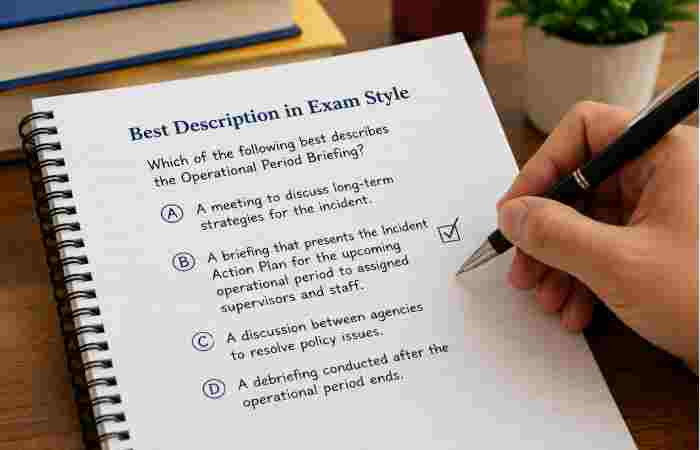
Should the question show up on a test, quiz or training item, the most appropriate response is most likely: A briefing where the Incident Action Plan is provided for the next operating period to appointed managers and personnel.
This description captures the real purpose of the briefing because it focuses on:
- The Incident Action Plan
- The next operational period
- The people who need to act on the information
Why the Operational Period Briefing Matters
The operational period briefing is important because incidents can change quickly. A wildfire, flood, chemical spill, security event, or large public emergency can shift from hour to hour. Without a proper briefing, people may work with outdated information, duplicate efforts, or miss important safety instructions.
This briefing is what will keep the response organization focused. It will provide everyone with the same road map for the upcoming period, which can be measured in hours, a whole shift, or greater.
Key reasons it matters:
- It keeps responders focused on current objectives.
- It reduces confusion during handoffs.
- It ensures better teamwork and coordination.
- It heightens safety awareness and risk consideration.
- It confirms the Incident Action Plan before execution.
What an Operational Period Briefing Entails
A quality operational period briefing is organized and directed. It typically addresses the most relevant information needed for effective operational activities in the upcoming period.
Typical items included:
- Incident objectives
- Current situation summary
- Tactical assignments
- Resource assignments
- Safety messages and hazards
- Communication plan
- Operational changes
- Weather or environmental updates
- Logistics or support concerns
This is not a time for extensive discussion or the generation of new planning concepts. It is about effectively conveying the plan so that the team can take action.
Table comparing OP Briefing to other IC Briefings:
To better visualize this it is helpful to compare it to other types of commonly used incident briefings.
| Briefing Type | Main Purpose | Who Attends | When It Happens | Key Focus |
| Operational Period Briefing | Shows the incident action plan for the next operational period. | Supervisors, attached responders, leads of a section, leaders of a unit. | When the operational cycle begins | Goals, approaches, tasks, safety. |
| Command Briefing | Updates command and general staff on major changes or critical decisions | Incident leadership only | As needed | Strategy, policy, major issues |
| Planning Meeting | Develops the Incident Action Plan | Incident management team | Before the operational period briefing | Planning objectives and resource needs |
| Tactics Meeting | Determines how objectives will be met | Operations and planning personnel | During the planning cycle | Tactical options and resource use |
| Shift Change Briefing | Essential information transfer between departing and incoming personnel | Staff going and coming. | At shift change | Current status, work outstanding, hazards |
What stands out in this comparison?
The operational period briefing is the bridge between planning and action. It is where the plan becomes practical instructions for people who will actually carry out the work.
Comparison Table: Good Briefing vs Poor Briefing
| Good Operational Period Briefing | Poor Operational Period Briefing |
| Clear and organized | Confusing and scattered |
| Focused on the Incident Action Plan | Filled with unnecessary details |
| Includes safety priorities | Ignores hazards |
| Gives specific assignments | Leaves roles unclear |
| Starts on time | Delayed and unstructured |
| Uses simple language | Uses jargon without explanation |
| Confirms understanding | Assumes everyone already knows the plan |
A strong briefing saves time later. A weak briefing creates mistakes, repeated work, and avoidable risks.
Main Elements of the Briefing
A professional operational period briefing usually follows a pattern. The exact format may vary, but the purpose remains the same: give every key participant a shared understanding of what must happen next.
-
Incident picture Update
Usually a briefing is preceded with the incident picture. This can entail changes in current operational period; effected zones, emerging risks, etc.
-
Incident objectives
The commander is going to lay out objectives for the operational period. These must be concise and attainable with a definitive measurement for success.
-
Tactical assignments
Team members will be assigned roles and responsibilities such as establishing containment; rescue or evacuations as appropriate. Zones to be searched or secured also come in this section.
-
Safety
This can never be said enough as far as the mission is concerned. The hazards and precautions involved should be included.
-
Communications
Responders need to know how to stay in touch. That means radio channels, contact procedures, reporting lines, and escalation steps.
-
Logistics and Support
If supplies, transportation, medical support, food, rest areas, or equipment are needed, those details are shared here.
-
Questions and Clarification
At the end, supervisors should have a chance to ask brief, focused questions so there is no misunderstanding.
Why It Is More Than Just a Meeting
Some people hear “briefing” and think of a quick announcement. But the operational period briefing is much more than that. It is a formal part of the command-and-control structure in incident management.
It matters because:
- It connects planning with execution
- It creates accountability
- It helps everyone work from the same version of the truth
- It reduces the chance of operational error
Without this step, even a good plan can fail in the field.
Example of an Operational Period Briefing in Real Life
Imagine a flood response operation in a city neighborhood. The planning team has spent the morning reviewing weather forecasts, road conditions, evacuation needs, and available rescue resources.
At the operational period briefing, the incident leader might explain:
- The flood risk is rising in two low-lying zones
- The objective for this period is to support evacuation and protect critical infrastructure
- Rescue teams are assigned to specific sectors
- Medical support is positioned near the staging area
- Radio communications will use Channel 3
- All teams must watch for unstable ground and electrical hazards
Teams then depart with a clear idea of what their role is to be. The value of that process is then established.
Bullet Points: What Makes It Effective?
A strong operational period briefing usually has these qualities:
- short enough to hold attention, but complete enough to guide action
- based on the latest approved Incident Action Plan
- delivered in clear, plain language
- focused on priorities, not background noise
- organized in a logical order
- supported by maps, charts, or handouts when needed
- respectful of time, safety, and operational discipline
Common Mistakes to Avoid
Even experienced teams can make mistakes during briefings. Some of the most common ones include:
- giving too much information at once
- skipping safety concerns
- changing assignments without clearly explaining them
- using vague instructions
- failing to confirm who is responsible for each task
- rushing through the briefing without allowing for questions
These types of errors can make the area of study difficult. The point of a good briefing is that you speak clearly, not quickly.
Comparison Table: Operational Period Briefing and Incident Action Plan
| Feature | Operational Period Briefing | Incident Action Plan |
| Format | Oral or visual briefing | Written or documented plan |
| Purpose | Communicate the plan to personnel | Define the plan for the incident |
| Audience | Supervisors and responders | Command staff, planners, and operational staff |
| Timing | Start of the operational period | Developed before the briefing |
| Function | Explains how the plan will be carried out | Provides the official strategy and assignments |
The Incident Action Plan is the blueprint. The operational period briefing is the moment that blueprint is explained to the people who must use it.
Simple Definition for Students
If you need a short study definition, use this:
Operational Period Briefing: A formal briefing that communicates the Incident Action Plan, objectives, assignments, and safety information for the upcoming operational period.
That definition is short, clear, and easy to remember.
Conclusion
The operation period briefing is arguably one of the most critical communication points during incident management. It directly translates plans into operations, promotes shared situational awareness, and provides guidance for safe and efficient operations. A strong briefing builds team confidence while weak briefings breed confusion.