
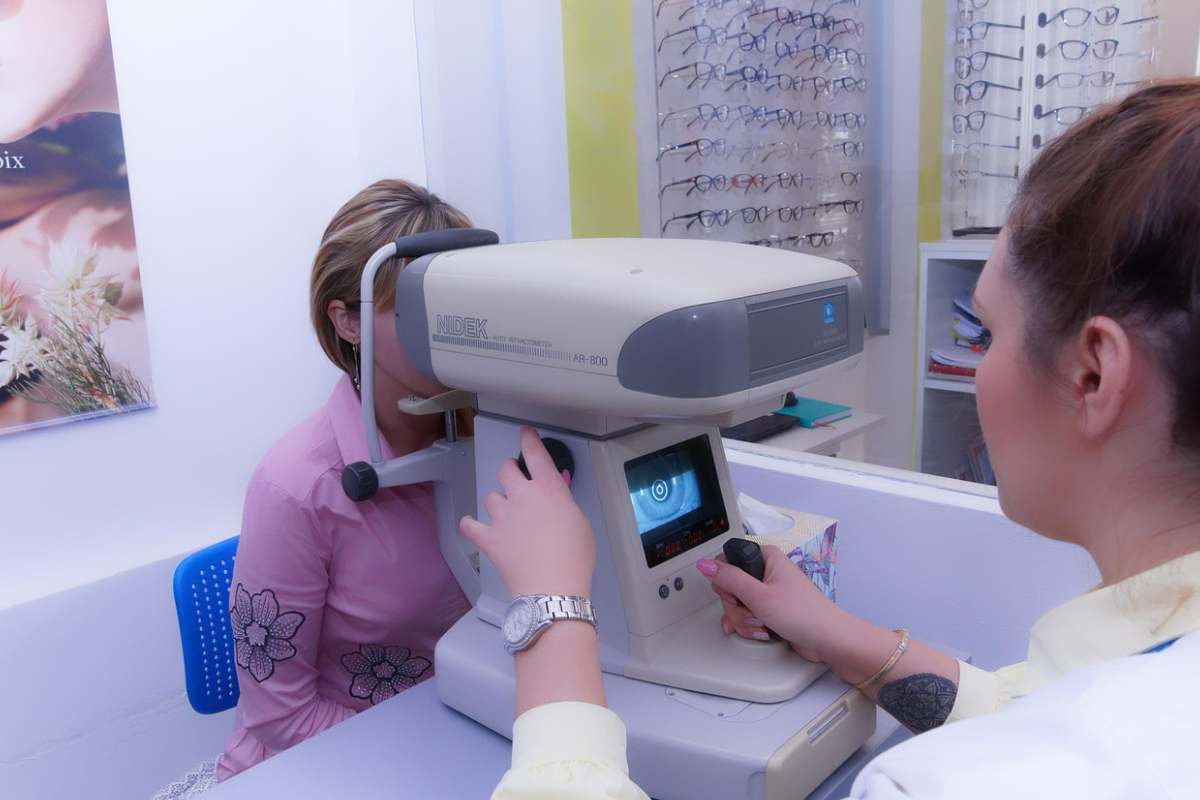
Most people schedule an eye exam when something feels wrong: blurry vision at the computer, trouble reading a menu, or a headache that won’t go away. That reactive approach misses the most important reason to see an optometrist regularly, which is that the conditions most likely to cause serious or permanent vision loss develop silently, without symptoms, long before they announce themselves in any way you’d notice on your own. Routine eye exams are not a check on how you’re currently seeing. They’re an ongoing investment in how you’ll see for the rest of your life.
Table of Contents
Your Eyes Reveal More Than You Think
A comprehensive eye exam covers significantly more ground than the familiar sequence of reading letters from a chart. During a thorough examination, your optometrist evaluates the health of the retina, optic nerve, and internal eye structures, screens for developing conditions like glaucoma, cataracts, and macular degeneration, and assesses how your eyes work together in terms of coordination, focusing ability, and depth perception.
What surprises many patients is that a routine eye exam also provides a direct view of the body’s blood vessels, the only place in the human body where blood vessels can be observed non-invasively without imaging. Changes visible in the retina’s blood vessels can indicate developing systemic conditions including hypertension and diabetes that may not yet have produced symptoms elsewhere. Your optometrist is, in a meaningful sense, looking at more than just your eyes.
The Silent Progression of Eye Disease
Glaucoma is often called the silent thief of sight for good reason. It develops gradually, without pain, and without noticeable changes in day-to-day vision until damage is already significant and, in many cases, irreversible. Macular degeneration and diabetic retinopathy follow a similar pattern: slow, asymptomatic progression in the early stages when intervention is most effective, followed by symptoms that appear only after meaningful damage has already occurred.
Early detection through routine examination is what makes the difference between a manageable condition and a vision-threatening one. When these diseases are identified at an early stage, treatment options are broader, outcomes are better, and the progression to serious vision loss is far more likely to be prevented or significantly slowed. The exam that feels routine and uneventful is the one that may be doing the most important work.
What a Comprehensive Exam at 414 Eyes Includes
At 414 Eyes in Milwaukee, each eye exam begins with a detailed health history covering current medications, personal and family eye health history, and any risk factors that might be relevant to your ocular health. This information shapes how the exam is conducted and what the optometrist is specifically watching for in your case.
The practice uses the Topcon Maestro 2 to capture detailed images of the inside of the eye, evaluating deeper layers than a standard examination can reach and providing a visual record that allows changes to be tracked accurately over time. For patients who want a more detailed look at conditions like macular degeneration, diabetic retinopathy, myopia, or glaucoma, the OCT Wellness Exam adds an additional layer of diagnostic depth for just $39. Traditional lighted microscopy, with and without dilation drops, is also available depending on your clinical needs.
Eye Exams for Every Age and Stage
Children are among the patients who benefit most from routine eye examinations and are also among the least likely to identify a vision problem themselves. A child with poor vision in one eye or a refractive error they’ve had since early development doesn’t have a reference point for what normal vision looks like. They won’t report a problem because they don’t know there is one. Early detection of conditions like amblyopia, commonly called lazy eye, and strabismus is critical because the visual system is still developing during childhood, and treatment during that window produces significantly better outcomes than intervention later in life.
Adults benefit from annual exams even when vision feels comfortable and unchanged. Prescription changes accumulate gradually enough that many patients don’t notice the shift until a fresh pair of correctly calibrated glasses reveals how much clarity they had been missing. Older adults face increasing risk from cataracts, glaucoma, and macular degeneration, making consistent annual monitoring a more pressing priority with each passing decade.
414 Eyes sees patients from age three onward, welcoming new patients and accepting a wide range of vision and medical insurance plans as well as CareCredit for patients who prefer a flexible payment option.
Contact Lenses: Fit, Comfort, and Long-Term Eye Health
Contact lens wear is not interchangeable with glasses wear from an eye health perspective. Lenses that sit directly on the cornea require a fitting process that accounts for the specific curvature and health of your individual eye, not just your prescription. An incorrectly fitted lens, or one worn beyond its replacement schedule or in conditions that restrict oxygen flow to the cornea, can cause complications ranging from chronic discomfort to corneal damage that affects vision long after the lens is removed.
A contact lens exam at 414 Eyes evaluates the fit, movement, and comfort of the lens on your specific eye and confirms that the cornea is tolerating wear well. For patients interested in specialty lens options, including lenses for astigmatism, multifocal options for presbyopia, or lenses designed for patients with dry eye or irregular corneal shape, a professional fitting is the foundation that makes comfortable, safe daily wear possible.
Insurance, Affordability, and Booking
414 Eyes accepts both vision and medical insurance, with coverage determined by the primary reason for your visit. Medical insurance may apply when the exam is primarily addressing a health condition or disease rather than a routine vision assessment, which is a distinction worth clarifying at the time of booking to ensure your visit is coded and covered correctly.
For patients without insurance coverage or those seeking additional services, the practice offers affordability options including CareCredit, and the $39 OCT Wellness Exam provides a detailed diagnostic tool at a price point that makes it accessible as a routine addition to the standard exam for patients with elevated risk factors.
Book Your Exam at 414 Eyes
Routine eye care is one of the highest-return health habits available to you, and the right optometrist makes the difference between an exam that tells you your prescription and one that gives you a genuine picture of your long-term eye health.
Whether you’re searching for a top rated optometrist in Milwaukee who combines clinical expertise with genuine patient-centered care, ready to schedule your eye exam in Milwaukee with a team that uses advanced imaging technology to see what standard exams miss, or looking to get properly fitted for Milwaukee contact lenses that work for your eyes and your lifestyle, 414 Eyes is ready to welcome you. Book your appointment today and see what comprehensive eye care actually looks like.
Also Read: A Patient’s Guide to Preparing for Cataract Surgery in Los Angeles